Owning a classic car is a dream come true for many automotive enthusiasts. The allure of vintage styling, nostalgic charm, and the thrill of driving a piece of automotive history can be irresistible. However, amidst the excitement of owning and maintaining these iconic vehicles, classic car owners often find themselves facing unique challenges and pitfalls.
In this article, we delve into six of the common mistakes that classic car owners make. From the types of wheels used to making questionable modifications, we explore the missteps that can detract from the enjoyment and preservation of these beloved automobiles. Whether you’re a seasoned collector or a novice enthusiast, understanding these mistakes is crucial for ensuring the longevity and value of your cherished classic car.
6 Mistakes Classic Car Owners Make
Mistake No.1: Small Wheels & Narrow Wheels
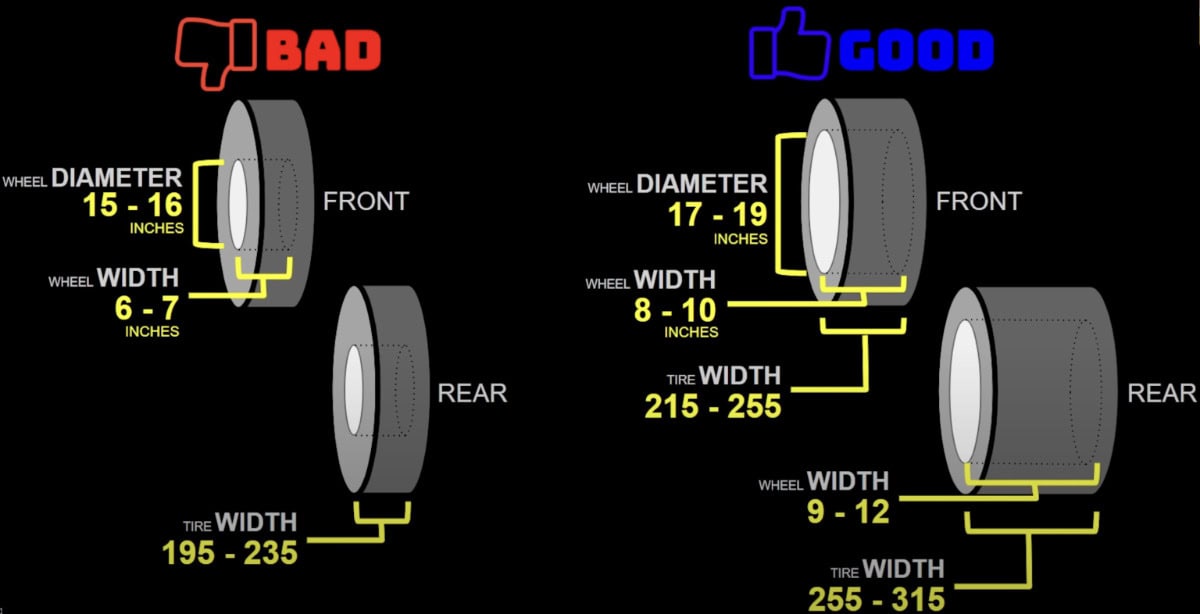
While personal preferences and individual style choices play a role in selecting wheels for a classic car, opting for small and narrow wheels may not be the most practical or advisable decision. It’s essential to consider the impact on aesthetics, handling, performance, ride comfort and braking before making any modifications to a classic car’s wheels. In the picture above you can see the recommended sizes.
Aesthetics
Classic cars often have specific design elements that are meant to be showcased, and small, narrow wheels may not complement the overall look of the vehicle. Larger, wider wheels can enhance the car’s appearance and maintain its vintage charm.
Handling and Performance
Smaller, narrower wheels may compromise the car’s handling and performance, especially if the vehicle was originally designed to accommodate larger wheels. Wider wheels provide better stability, traction, and cornering ability, enhancing the driving experience.
Ride Comfort
Larger wheels with wider tires typically offer a smoother and more comfortable ride, as they can better absorb bumps and imperfections in the road surface. Smaller, narrower wheels may result in a harsher ride quality, detracting from the enjoyment of driving the classic car.
Braking
Upgrading to larger wheels often allows for the installation of larger brakes, which can improve braking performance and safety. Smaller wheels may limit the size of the brakes that can be installed, potentially compromising stopping power.
Mistake No. 2: Steel Wheels
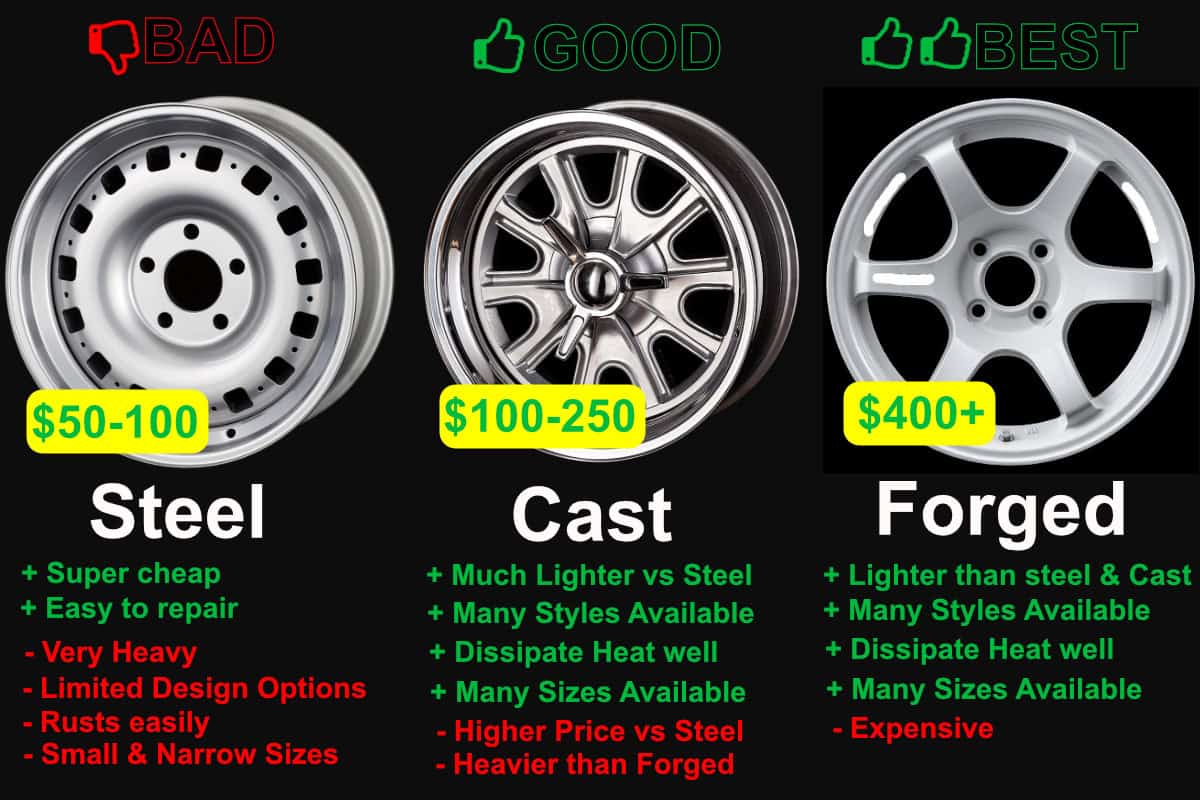
Steel wheels can offer durability and authenticity for certain classic cars, they may also pose challenges in terms of weight, ride quality, and aesthetic options. It’s essential for you as a classic car owner to carefully consider these factors and weigh the pros and cons before deciding whether to use steel, cast or forged wheels on you vehicles. In the picture above you can see a comparison of the 3 types of wheels.
Weight
Steel wheels are generally heavier than cast and forged wheels, which can affect the car’s handling, acceleration, and braking performance. The increased weight can lead to slower acceleration, reduced fuel efficiency, and longer braking distances.
Suspension and Ride Quality
The heavier weight of steel wheels can put additional strain on the suspension components, leading to premature wear and tear. This can result in a harsher ride quality and increased vibrations or rattles, especially on rough or uneven roads.
Limited Aesthetic Options
Steel wheels typically have a simpler design compared to cast and forged wheels, which may limit the aesthetic options available for customization. This can affect the overall look and style of the classic car, especially if the owner prefers a more modern or customized appearance.
Corrosion
Steel wheels are more susceptible to corrosion and rust compared to cast and forged wheels, especially if they are not properly maintained or exposed to harsh environmental conditions. Over time, rust and corrosion can weaken the structural integrity of the wheels and lead to premature failure.
Difficulty in Finding Replacement Parts
Steel wheels for classic cars may be more challenging to find compared to cast and forged wheels, especially if the car has unique or non-standard wheel specifications. This can make it harder to find suitable replacement parts in case of damage or wear.
Mistake No. 3: Low Performance Tires
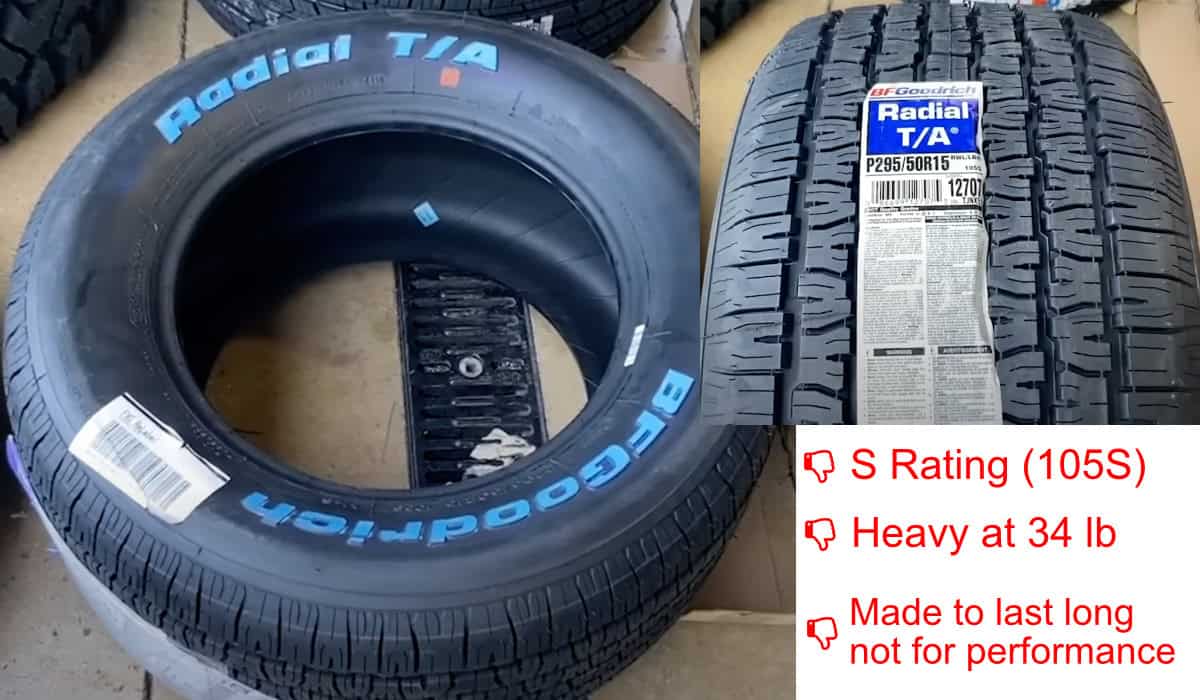
Using low-performance tires on a classic car can result in reduced handling, braking, and stability, as well as increased tire wear and aesthetic concerns. You should carefully consider their driving needs, safety requirements, and preservation goals when selecting tires for their vehicles, opting for options that prioritize performance, durability, and authenticity.
Reduced Handling and Grip
Low-performance tires typically have inferior traction and grip compared to high-performance or specialized tires. This can result in reduced handling capabilities, especially during cornering, braking, or adverse weather conditions. The classic car may feel less stable and responsive on the road, increasing the risk of accidents or loss of control.
Longer Braking Distances
Low-performance tires may have longer braking distances compared to high-performance tires, particularly in wet or slippery conditions. This can compromise the classic car’s ability to stop quickly and safely, increasing the likelihood of rear-end collisions or other braking-related accidents.
Poor Stability at High Speeds
Classic cars equipped with low-performance tires may experience stability issues at higher speeds. The tires may be more prone to sidewall flexing, tire deformation, or oscillations, leading to a less stable and comfortable driving experience. This can make highway driving or sustained high-speed cruising more challenging and potentially dangerous.
Increased Risk of Tire Wear
Low-performance tires are generally made from cheaper materials and construction techniques, which can result in faster tire wear and reduced longevity. The tires may wear unevenly or develop premature signs of deterioration, such as cracking, bulging, or flat-spotting. This can necessitate more frequent tire replacements, increasing maintenance costs for the classic car owner.
Mistake No. 4: Drum Brakes & Vintage Disc Brakes
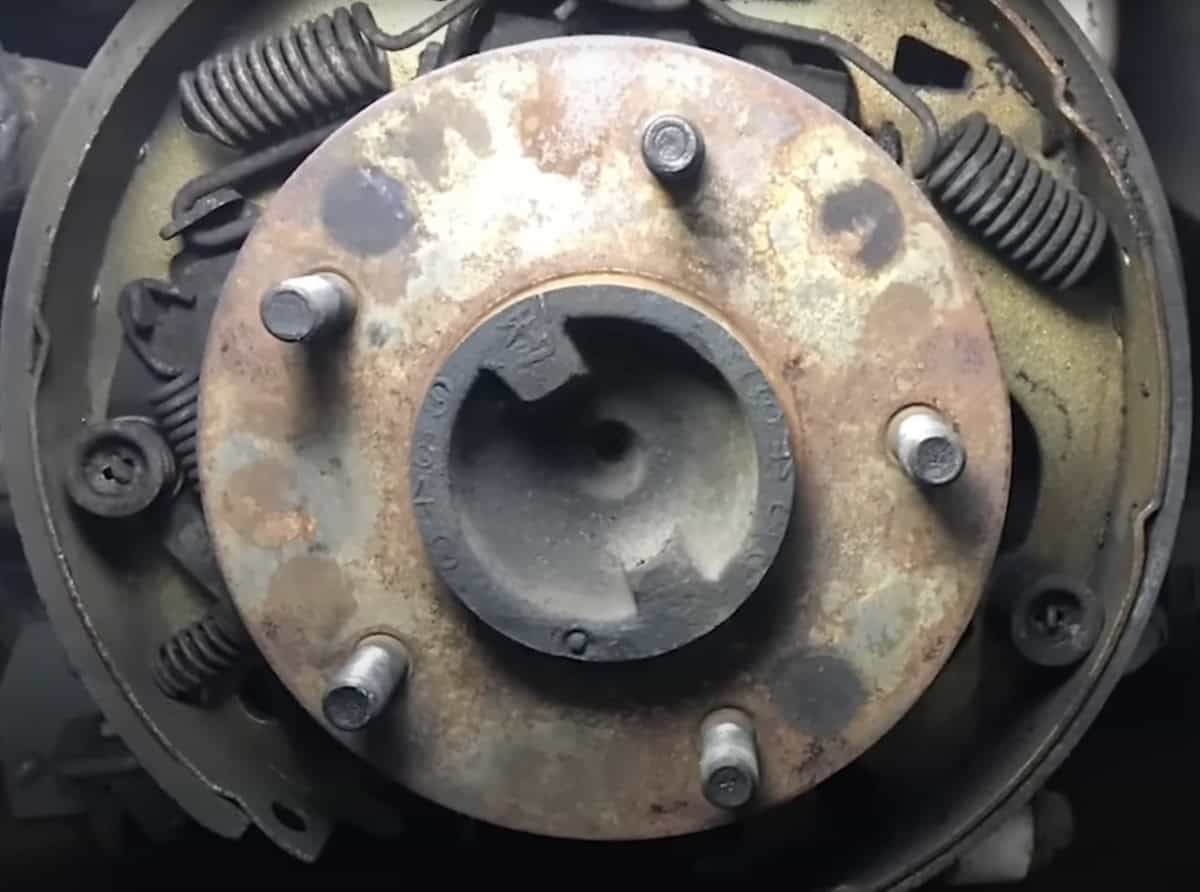
Using drum brakes or vintage disc brakes on a classic car may lead to issues such as limited stopping power, brake fade, uneven wear, maintenance challenges, corrosion, and compatibility limitations. You should carefully assess the condition of your vehicle’s brake system and consider upgrading to modern braking technology if improved performance, reliability, and safety are desired.
Limited Stopping Power
Drum brakes, especially those found on older vehicles, generally provide less stopping power compared to modern disc brakes. This can result in longer braking distances, particularly in emergency situations or during high-speed driving. Vintage disc brakes may also lack the performance-enhancing features of contemporary disc brake systems, leading to suboptimal braking performance.
Fading and Heat Dissipation Issues
Drum brakes are more prone to brake fade under heavy or prolonged braking conditions compared to disc brakes. The design of drum brakes can lead to heat buildup within the brake drum, reducing braking efficiency and increasing the risk of brake fade. Vintage disc brakes may also suffer from inadequate heat dissipation, especially during spirited driving or on mountainous terrain, compromising their effectiveness.
Brake Pull and Uneven Wear
Drum brakes are susceptible to brake pull, where one wheel brakes more forcefully than the other, leading to steering instability and uneven tire wear. This can result from various factors, including misadjusted brake components, worn brake linings, or unequal hydraulic pressure distribution. Vintage disc brakes may also exhibit similar issues if not properly maintained or calibrated, causing uneven brake pad wear and diminished braking performance.
Maintenance Challenges
Drum brakes and vintage disc brakes require specialized knowledge and tools for maintenance and repair. Servicing drum brakes involves intricate adjustments, such as setting the brake shoe clearance and ensuring proper drum-to-shoe contact. Vintage disc brakes may require periodic inspection and adjustment of components such as calipers, rotors, and hydraulic lines. Finding replacement parts for these older brake systems can also be challenging and may require sourcing from specialty suppliers or salvaged components.
Corrosion and Rust
Drum brakes, particularly those exposed to moisture and road salt, are susceptible to corrosion and rust buildup over time. Corroded brake components can compromise braking performance and increase the risk of brake failure. Vintage disc brakes may also experience corrosion issues, especially if the brake calipers or rotors are not adequately protected against environmental elements. Regular inspection and maintenance are essential to address corrosion-related concerns and ensure the continued reliability of the braking system.
Mistake No. 5: Racing Brake Pads
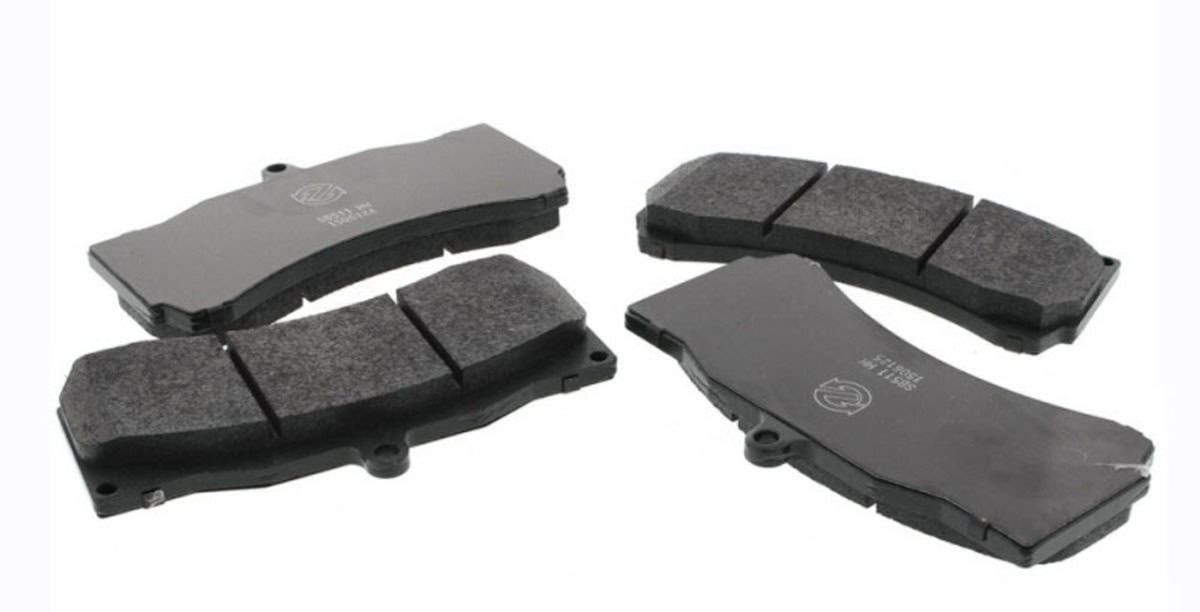
Using racing brake pads on a classic car may result in excessive brake noise, increased brake dust and wear, reduced performance at lower temperatures, limited cold bite and initial brake response, brake fade and overheating, and compatibility and fitment issues. You should carefully consider your driving needs and preferences before opting for racing brake pads, ensuring that the selected pads strike a balance between performance, comfort, and safety for everyday use.
Increased Brake Dust and Wear
Racing brake pads typically contain aggressive friction materials that generate higher levels of brake dust compared to standard brake pads. The increased dust accumulation can soil the wheels and surrounding components, requiring more frequent cleaning and maintenance. Additionally, the abrasive nature of racing pads may accelerate brake rotor and caliper wear, leading to premature component failure and reduced longevity.
Excessive Brake Noise
Racing brake pads are designed to provide maximum friction and stopping power, often at the expense of noise reduction. As a result, these pads may produce loud squealing or squeaking noises during normal braking, which can be undesirable for street driving and may compromise comfort and enjoyment.
Reduced Brake Performance at Lower Temperatures
Racing brake pads are optimized for high-temperature operating conditions commonly encountered on the racetrack. In everyday driving scenarios, such as city streets or highways, the brakes may not reach the temperatures necessary to fully activate the aggressive friction compounds. As a result, the braking performance of racing pads may be suboptimal at lower temperatures, leading to longer stopping distances and decreased effectiveness during normal driving conditions.
Limited Cold Bite and Initial Brake Response
Racing brake pads often exhibit reduced cold bite, meaning they may not provide immediate and predictable brake response when initially applied at lower temperatures. This can result in a delayed or inconsistent braking feel, potentially compromising driver confidence and safety, particularly in emergency braking situations or stop-and-go traffic conditions.
Increased Brake Fade and Overheating
Racing brake pads are designed to withstand the high temperatures generated during aggressive track driving. However, prolonged or repeated heavy braking on the street, such as during spirited driving or mountain descents, can lead to brake fade and overheating with racing pads. Brake fade occurs when the friction materials lose their effectiveness due to excessive heat buildup, resulting in diminished stopping power and increased brake pedal travel.
Mistake No. 6: Not Upgrading Anti-Roll Bars
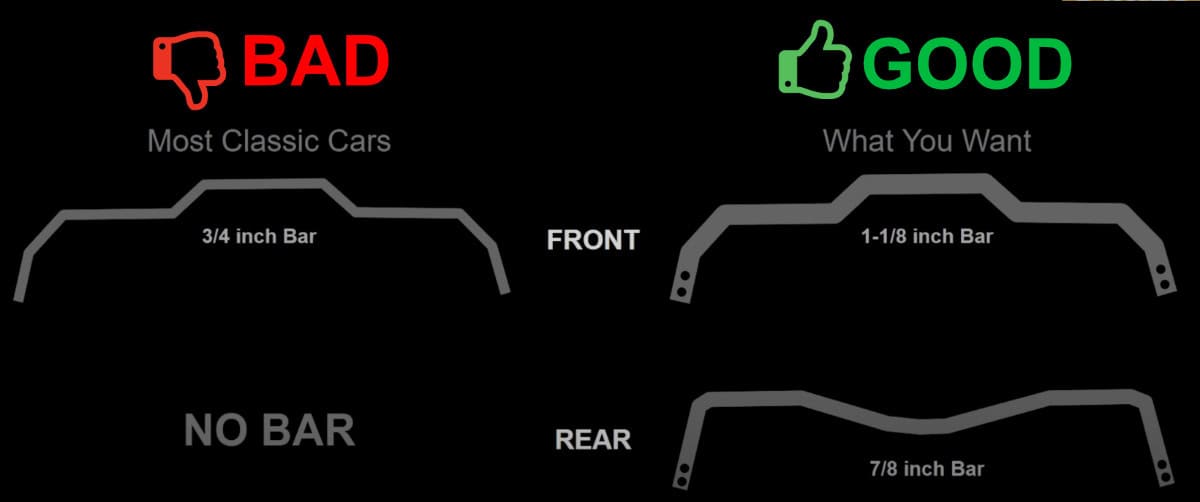
Not upgrading anti-roll bars on a classic car may result in increased body roll, reduced cornering stability, poor weight transfer control, inefficient load distribution, compromised ride comfort, and limited performance potential. You should carefully consider the benefits of upgrading anti-roll bars to improve handling, stability, and overall driving dynamics, especially if you intend to drive the vehicle enthusiastically or competitively.
Increased Body Roll
Anti-roll bars, also known as sway bars, help minimize body roll during cornering by distributing the lateral forces more evenly between the left and right wheels. Without upgraded anti-roll bars, the classic car may experience excessive body roll, causing the vehicle to lean excessively in corners. This can compromise stability, handling, and overall driving dynamics, especially during spirited driving or emergency maneuvers.
Poor Weight Transfer Control
Anti-roll bars help control weight transfer during cornering by reducing body roll and keeping the vehicle’s center of gravity more stable. Without upgraded anti-roll bars, the classic car may experience significant weight transfer, causing the suspension to compress unevenly and leading to changes in tire contact patch and grip levels. This can result in reduced traction, compromised cornering performance, and increased tire wear.
Inefficient Load Distribution
Upgraded anti-roll bars contribute to more balanced load distribution across the vehicle’s axles during cornering, promoting better tire grip and handling consistency. Without these upgrades, the classic car may exhibit uneven weight distribution, with excessive load transfer to one side of the vehicle. This can lead to uneven tire wear, reduced cornering grip, and diminished overall stability, particularly in high-speed maneuvers or emergency evasive actions.
Reduced Cornering Stability
Upgraded anti-roll bars provide greater resistance to body roll, resulting in improved cornering stability and control. Without these upgrades, the classic car may exhibit unpredictable handling characteristics, such as excessive understeer or oversteer, particularly when navigating tight curves or uneven road surfaces. This can increase the risk of loss of control and potential accidents, especially at higher speeds.
Limited Performance Potential
Classic cars with stock anti-roll bars may lack the agility, responsiveness, and overall performance capabilities of modern vehicles equipped with upgraded suspension components. Without enhancing the anti-roll bars, the classic car may struggle to keep up with contemporary counterparts in terms of handling precision, cornering speeds, and overall driving enjoyment. This can detract from the driving experience, especially for enthusiasts seeking to push the vehicle to its limits on the track or spirited drives.
Conclusion
In conclusion, while owning a classic car can be a deeply rewarding experience, it also comes with its fair share of challenges. From overlooking regular maintenance to succumbing to the temptation of ill-advised modifications, you often find yourself navigating a minefield of potential mistakes.
However, by being vigilant, informed, and proactive, enthusiasts can avoid these common pitfalls and ensure that their beloved vintage automobiles remain in optimal condition for years to come. By respecting the heritage and craftsmanship of these iconic vehicles and taking the necessary steps to preserve them, classic car owners can continue to enjoy the timeless thrill of driving a piece of automotive history.
Ultimately, the journey of owning a classic car is as much about the preservation of automotive heritage as it is about the joy of driving. By learning from the mistakes of others and approaching ownership with care and consideration, enthusiasts can truly appreciate the beauty and legacy of these remarkable machines for generations to come.