The 1957 Chevrolet Bel Air holds a special place in the heart of American car enthusiasts, standing as an iconic symbol of postwar optimism and style. With its distinctive tailfins, sleek design, and powerful V8 engine, the ’57 Chevy encapsulates the essence of the American dream, continuing to capture attention even after more than 60 years.

Diving into the Timeless Appeal of the 1957 Chevrolet Bel Air
Snapshot of the 1957 Chevy Bel Air:
- Manufacturer: Chevrolet division of General Motors
- Production Run: 1955 – 1957
- Body Style: 2-door coupe, convertible, 4-door sedan, 4-door station wagon
- Layout: Front-engine, rear-wheel drive
- Engine Options: 235 CID “Blue Flame” inline 6-cylinder, 283 CID “Turbo Fire” V8, 348 CID “Turbo Thrust” V8
- Transmission: 2-speed Powerglide automatic, 3-speed manual
- Power: Up to 250 hp (V8 models)
The third generation Bel Air made its debut in 1955, boasting an entirely new exterior and interior design. However, it was the 1957 restyle that truly elevated the Bel Air to iconic status.
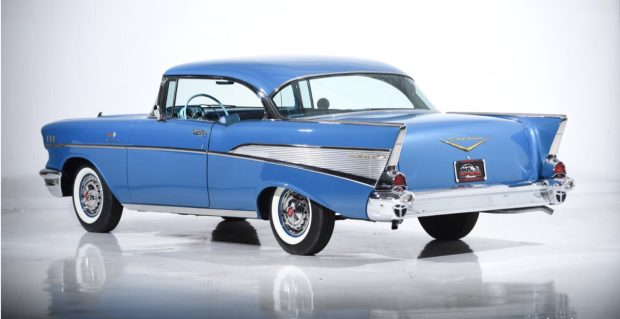
Captivating ’50s Styling:
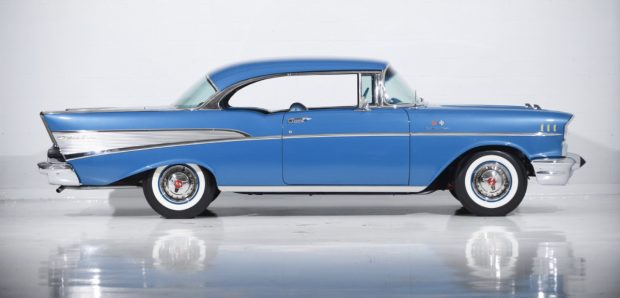
The 1957 Bel Air’s bold new look drew inspiration from contemporary fighter jets, embracing the jet age and space age styling of the era. Notable features included:
- Striking tailfins sweeping up from the rear quarters
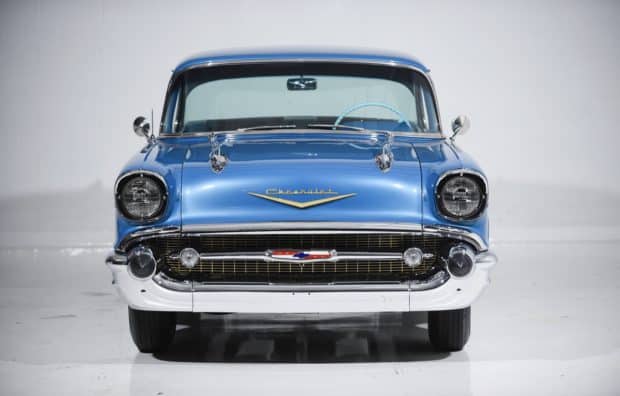
- Hooded headlights and egg-crate grilles
- Curvaceous bumpers and bodysides
- Distinctive two-tone and three-tone color schemes
Available in Sport Coupe, Convertible, four-door sedan, and Nomad station wagon body styles, the Bel Air allowed buyers to personalize their cars with options like Continental kits, fender skirts, and dual exhaust.
Power and Precision Under the Hood:
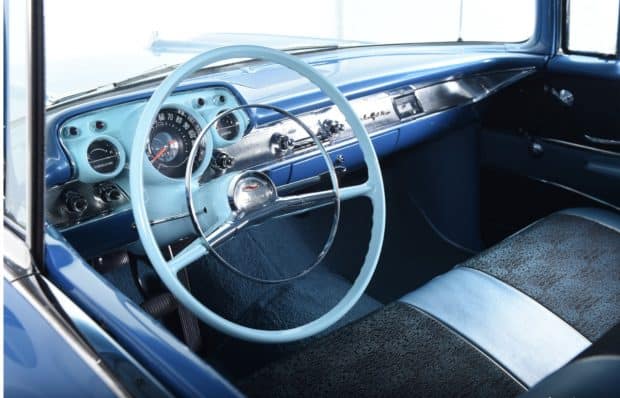
Beyond its flashy exterior, the ’57 Bel Air packed a punch with Chevrolet’s advanced overhead valve V8 engines:
- Engine options ranged from the 235 CID Blue Flame inline 6-cylinder to the 283 CID Turbo Fire V8 and the powerful 348 CID Turbo Thrust V8.
- Fuel injection was a rare option on the 283 V8.
- Transmission choices included a standard 3-speed manual and an optional 2-speed Powerglide automatic.
Hot Rodders’ Delight:
The high-powered V8 models of the ’57 Bel Air quickly became favorites among hot rodders and custom car builders. Thanks to its excellent chassis and suspension design, the Bel Air became an ideal platform for racing and performance modifications. Drag racers often opted for the lightweight 2-door post models, swapping in larger displacement V8s from Chevrolet’s truck lines.
Sales Triumph for Chevrolet:
The bold restyle of 1957 proved to be a massive success for Chevrolet, with Bel Air production soaring to over 760,000 units – the highest ever for this model. Representing nearly 25% of Chevrolet’s total production for 1957, the Bel Air convincingly outsold its closest competitor, the Ford Fairlane 500, by over 300,000 units. This success further solidified Chevrolet’s position as America’s top brand.
Tri-Five Chevy Collector Community:
In the modern collector scene, the 1955, 1956, and 1957 Chevrolets are collectively known as the “Tri-Five Chevys.” With excellent parts availability and interchangeability between model years, the Tri-Five cars are favorites for restoration. Among them, the 1957 Bel Air, being the most flashy and desirable, commands the highest prices and interest. Events like the Tri-Five Nationals and various car shows keep the enthusiasm alive within the Tri-Five community.
’57 Chevy’s Pop Culture Stardom:
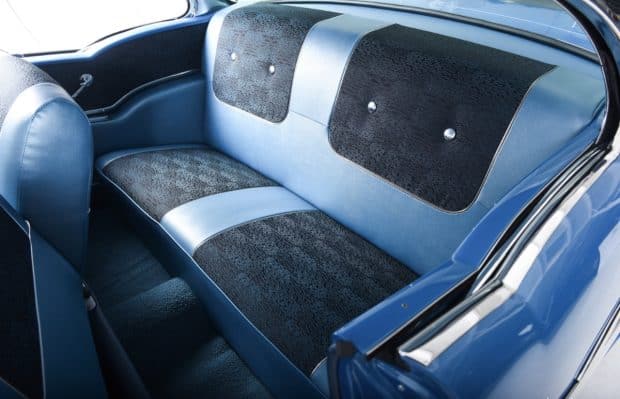
The 1957 Chevy Bel Air isn’t just an automotive icon; it has achieved legendary status in American pop culture:
- Featured in hit songs like the Beach Boys’ “409” and Jan and Dean’s “Dead Man’s Curve.”
- Immortalized in classic movies such as American Graffiti and Grease.
- Diecast models and kits of the ’57 Chevy remain popular collectibles.
- Continues to appear in advertising imagery, evoking the cool vibes of the 1950s.
FAQs About the 1957 Chevy Bel Air:
- What made the ’57 Bel Air so special compared to earlier models? The 1957 model brought an all-new exterior design with distinct styling cues like the tailfins and two-tone paint, setting it apart as a revolutionary departure from previous models.
- What engine options were available in 1957? Options included the inline 6-cylinder Blue Flame, Turbo Fire 283 V8, Turbo Thrust 348 V8, with fuel injection available for the 283 V8.
- How much power did the top engines produce? The standard 283 Turbo Fire V8 made 220 horsepower, with optional fuel injection bringing it up to 283 hp. The 348 Turbo Thrust delivered 250 to 280 hp.
- How well did the ’57 Bel Air sell compared to competitors? It was a massive sales success, outselling rival makes by wide margins, with total Bel Air production nearing 762,000 units compared to around 447,000 Ford Fairlane 500s sold.
- What body styles were available for the ’57 Bel Air? It came in 2-door Sport Coupe, 2-door Convertible, 4-door Sedan, and 4-door Nomad wagon configurations, with the hardtop Sport Sedan being discontinued.
The 1957 Chevy Bel Air remains a symbol of GM design triumph and a testament to the golden era of American automobiles. Its enduring appeal continues to captivate both seasoned enthusiasts and new generations, making it the quintessential classic American car.